
Guide
How to Play Dominoes
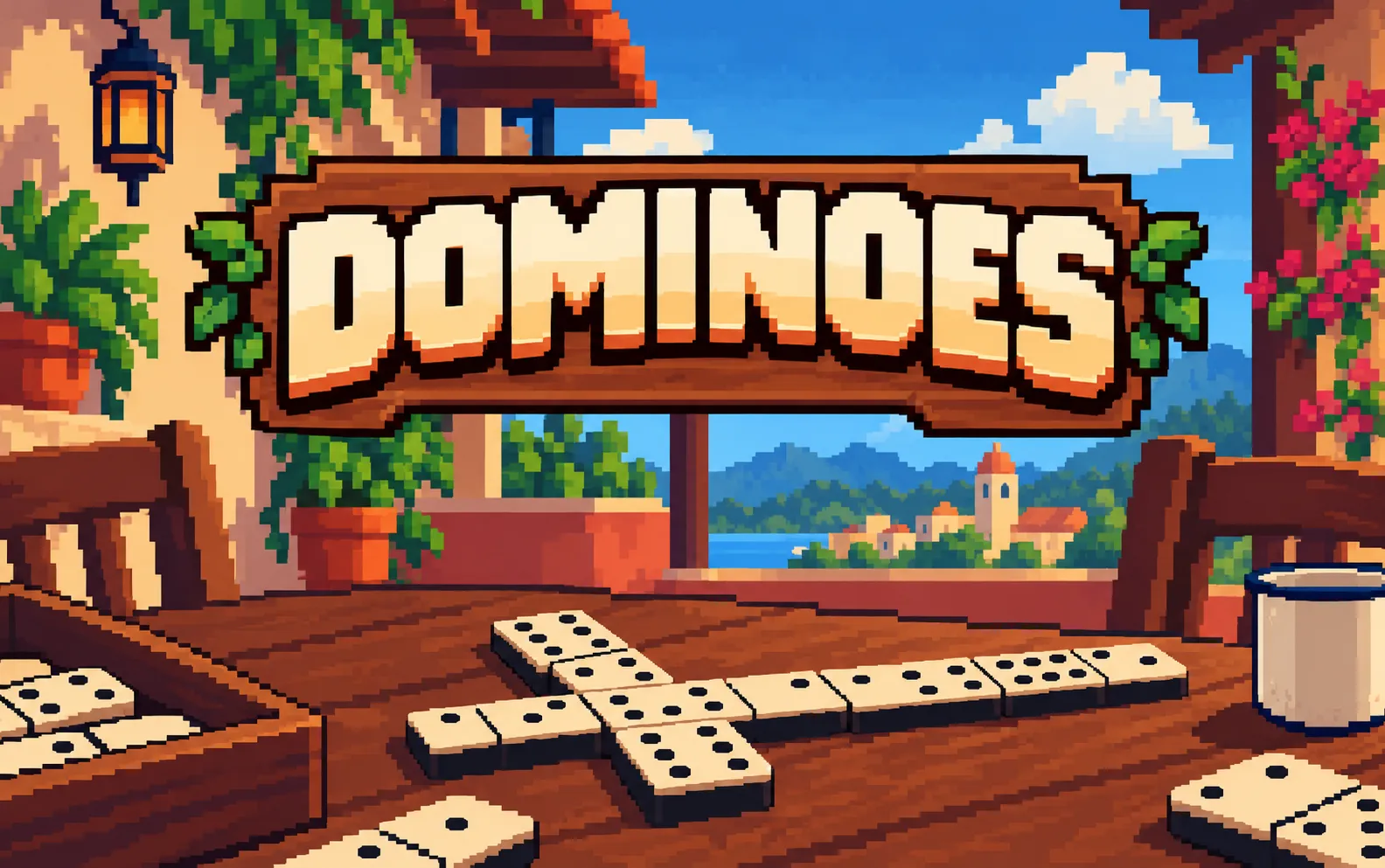
Dominoes is a game of matching numbers and running out of tiles. A double-six set has twenty-eight tiles, each carrying two numbers from nought to six, and every pair appears exactly once. You take turns adding a tile to one end of a growing line, matching the number already showing there, and the first player to get rid of everything in their hand wins the hand.
What makes it a game rather than a chore is that you cannot always play. If neither end of the line matches anything you hold, you draw from the boneyard until you find something — and when the boneyard is spent you simply pass. A hand where both players pass in turn is blocked, and then the tiles you are still holding decide it.
That is the shape of the whole thing: get rid of weight, keep enough variety that you can always answer, and if you can see your opponent is short of fours, put a four at both ends. On Opka you play one seat against an AI opponent in the Draw game, the engine owns the rules — what matches, when you draw, what a hand scored — and the match runs to 100 points.
How a game of Dominoes is set up
A double-six set is every pair of numbers from nought to six, counted once: nought-nought up to six-six, twenty-eight tiles in all, adding up to a hundred and sixty-eight pips. Seven of them are doubles, where both halves show the same number.
Two players take seven tiles each. The remaining fourteen become the boneyard, face down, to be drawn from later. Nobody sees anybody else's tiles.
The tile that opens the hand is not a choice: the highest double goes down first, and whoever holds it starts. If the deal produced no doubles at all — which it can — the heaviest tile opens instead.
- Twenty-eight tiles, seven each, fourteen in the boneyard.
- A hundred and sixty-eight pips in the set, seven of them doubles.
- The highest double opens, or the heaviest tile if there are none.
Matching an open end
The line has two ends, and each shows a number. You may add a tile to either end as long as the tile carries that number, and the matching half is laid against the end so the other half becomes the new open number.
That is the whole of the matching rule, and it has one consequence worth spelling out: a tile carrying both open numbers can go on either end, and those are genuinely different moves. Play the four-two on a four and the line now ends in a two; play it on the two and the line ends in a four. Which one you want depends on what you are holding and what you think they are not.
If nothing you hold carries either open number, you cannot play at all — and that is when you draw.
- Two open ends, each showing a number.
- A tile must carry the number of the end it goes on.
- A tile matching both ends is two different moves.
Doubles
A double is a tile with the same number on both halves, and it is laid crosswise against the line so it stands out. The crosswise part is decoration: it matches as its own number and leaves that same number showing.
This makes doubles awkward to get rid of. An ordinary tile has two numbers and so two chances to fit; a double has one. A double you are still holding late in a hand is often a double you are stuck with, which is why experienced players lead with them rather than saving them.
In some variants the first double becomes a spinner and the line grows in four directions from it. This table does not use a spinner — the line has two ends throughout — which keeps the layout readable and the matching rule the same everywhere.
- A double shows one number, so it has half the chances to fit.
- Crosswise is how it is drawn, not how it matches.
- No spinner here: the line keeps two ends from start to finish.
Drawing from the boneyard
This is the Draw game, which means being stuck is not the end of your turn. If you cannot match either end you take a tile from the boneyard, and you keep taking them until you find something you can play.
The boneyard is not drained to the last tile. Two are always left, undrawable, which stops a hand from being decided by whoever happened to empty the pile. Once the boneyard is down to those two and you still cannot play, you pass.
Drawing is not optional and it is not a choice. If you can play, you must; if you cannot, you draw. The tiles you pick up are yours, so a run of bad draws leaves you holding more weight than you started with — which is exactly what makes a blocked hand expensive.
- Cannot play? Draw, and keep drawing until you can.
- The last two tiles in the boneyard are never drawn.
- You may not draw when you have a legal play.
When nobody can play
If the boneyard is down to its last two and neither player can match an end, both pass in turn and the hand is blocked. It ends there, with tiles still in both hands.
A blocked hand goes to whoever is holding the fewest pips, and they score what everybody else is still holding — the same as if they had played out. Being blocked while holding the double six is the worst outcome in the game: twelve pips that were never going anywhere.
If the two lowest counts are level, nobody scores and the tiles are shuffled again. There is no fair way to split it, and inventing one would decide matches quietly.
- Both players pass in turn and the hand is blocked.
- Lowest pip count wins it and scores the rest.
- A tie for lowest scores nothing and is redealt.
Scoring the pips
Whoever empties their hand wins the hand and scores the pips left in the other hand. Pips are simply the spots: the six-four is ten, the double blank is nothing, and the whole set is a hundred and sixty-eight.
So the score is never about what you played, only about what the loser was still holding. A hand won by one tile with the opponent sitting on forty pips is worth far more than a hand won by five tiles against an opponent down to a double blank.
That is why getting rid of weight early matters more than it looks. The heavy tiles are the ones that will cost you if the hand ends suddenly, and the hand can always end suddenly.
- The winner scores the pips left in the loser's hand.
- Pips are the spots: the double six is twelve, the double blank nothing.
- First to 100 points wins the match.
Reading what your opponent is short of
Every number appears on exactly seven tiles of a double-six set. Once you know how many of those you are holding and how many are already on the table, you know how many are unaccounted for — and that is a real read, not a guess.
The moment your opponent draws instead of playing, they have told you something: neither open number is in their hand. If the ends were a three and a five when that happened, threes and fives are the numbers to keep aiming at.
Closing both ends onto the same number is the strongest version of this. If both ends show a five and you hold three of the seven fives, an opponent needs one of the four you cannot see — and if the boneyard is spent, they pass.
- Seven tiles carry each number; count the ones you can see.
- A draw is a confession: neither end matched their hand.
- Both ends on one number is the tightest block there is.
Dominoes and Mexican Train
Mexican Train is the version most people have played at a family table, and it is a different game built from the same tiles. It usually uses a larger set — double-twelve is common — and every player builds their own train, a personal line they extend on their turn, alongside a communal Mexican train anybody may add to.
The Draw game here is much tighter. One line, two ends, and everything you play is played into the same shared position your opponent is also fighting over. There is no train of your own to develop, no branching, and no spinner: your only decisions are which tile and which end.
The other relatives are further away still. Chickenfoot builds three-branch shapes off each double; Muggins scores points during play whenever the open ends add to a multiple of five, so it rewards arithmetic rather than blocking. This table plays neither — just Draw, scored on pips at the end of the hand.
- Mexican Train: bigger set, a train each, plus a communal one.
- Draw: one shared line, two ends, no branching.
- Muggins scores during play; here pips are counted at the end.