




Guide
How to Play Canfield Solitaire
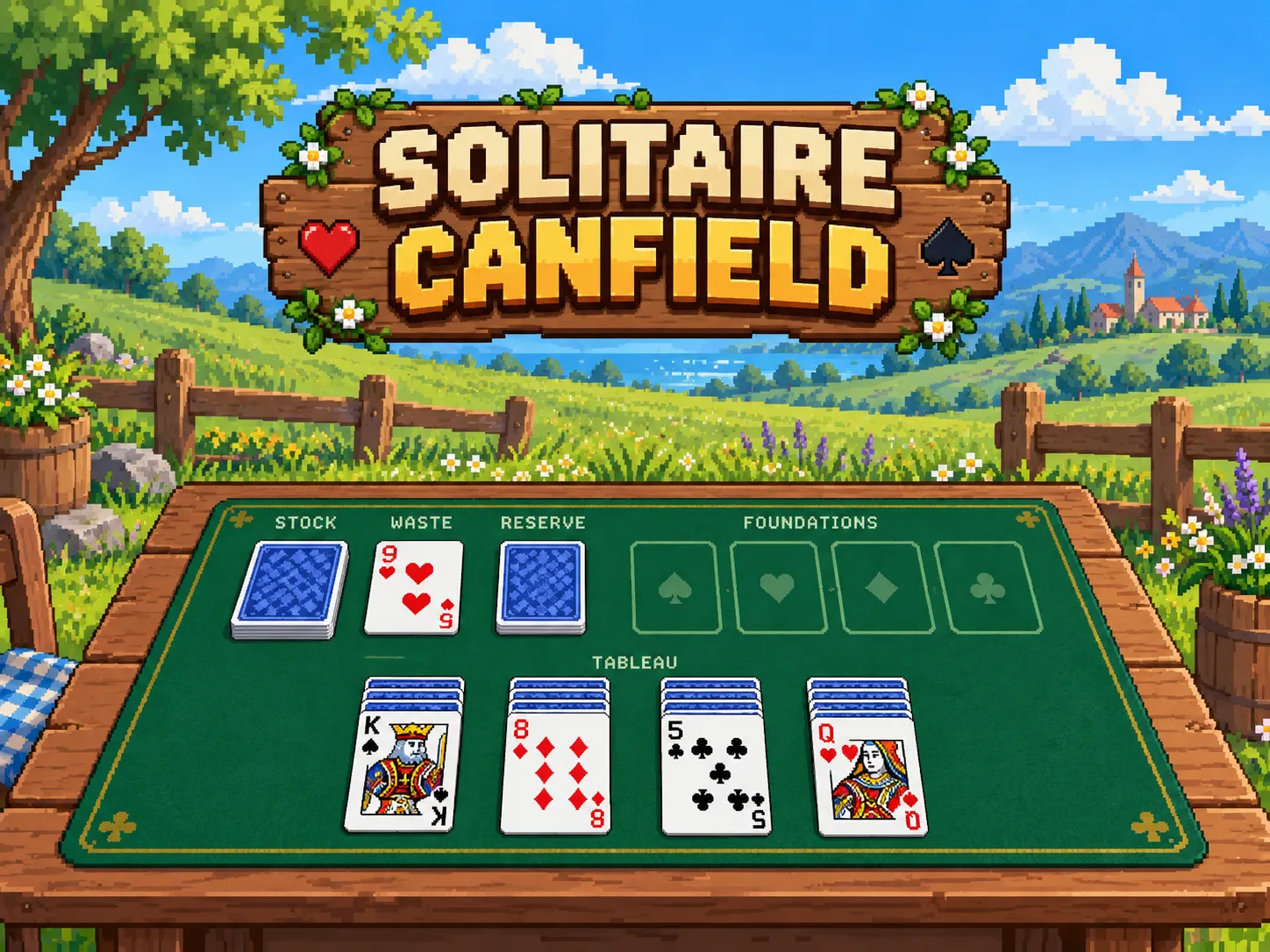
Canfield deals a 13-card reserve, four tableau columns, and one card straight to the foundations — and that card sets the BASE RANK the other three foundations must start from. Foundations build up by suit from the base rank, wrapping through King back to Ace, so a game that starts on a 4 climbs 4-5-...-K-A-2-3.
The game takes its name from Richard Canfield, whose Saratoga Springs casino sold the deal as a gamble in the 1890s: players bought the deck for $50 and earned $5 for every card they landed on the foundations. The Opka table plays the classic solitaire rules — draw three, unlimited redeals — with every deal from a seeded shuffle so finished games can be verified for the leaderboard.
How Canfield is set up
Canfield uses one standard 52-card deck. Thirteen cards form the reserve with only its top card face up, one card starts the first foundation and fixes the base rank, and four face-up cards seed the tableau columns. The remaining 34 cards form the stock.
The reserve is the heart of the deal: whenever a tableau column empties, the reserve's top card slides into the space automatically, and the next reserve card turns face up.
- Reserve: 13 cards, top face up, playable to foundations or tableau.
- Foundations: four piles building up by suit from the base rank, wrapping King to Ace.
- Tableau: four columns building down by alternating color, wrapping Ace to King.
- Stock: 34 cards dealt three at a time with unlimited redeals.
Legal moves
Foundations accept one card at a time: the next rank up in suit, wrapping from King to Ace. A new foundation can only be started with a card of the base rank.
Tableau columns build down by alternating color and wrap from Ace to King, so a black King stacks on a red Ace. Face-up runs move only as complete columns — the moving pile's bottom card must fit the destination — and partial moves are never allowed.
Draw three cards from the stock to the waste when nothing else helps; only the top waste card is playable. When the stock runs out, the waste flips over to become the stock again, as many times as you need.
The reserve runs the deal
With only four tableau columns, most of the deck funnels through the reserve and the waste. Every emptied column pulls the reserve top automatically, so clearing columns is how you dig through those 13 cards.
Once the reserve is exhausted, empty columns stay open and accept any card or run from the waste or another column — the one moment Canfield hands you real freedom.
Working the draw-3 stock
Draw-3 means only every third stock card surfaces on a given pass. Playing a waste card shifts which cards appear on the next redeal, so a single tableau or foundation play can unlock a whole new rotation of the stock.
Unlimited redeals keep the game alive, but they cannot reorder the stock — if a full pass yields no plays, the deal is over in practice.