
Guide
How to Play Klondike Solitaire
Klondike is the solitaire layout most players mean when they say regular Solitaire: seven tableau columns, a stock and waste pile, and four foundations built by suit.
The Opka table uses the same rules module for Draw 1 and Draw 3, so the core decisions stay familiar while the stock mode changes how far ahead you need to plan.
How Klondike is set up
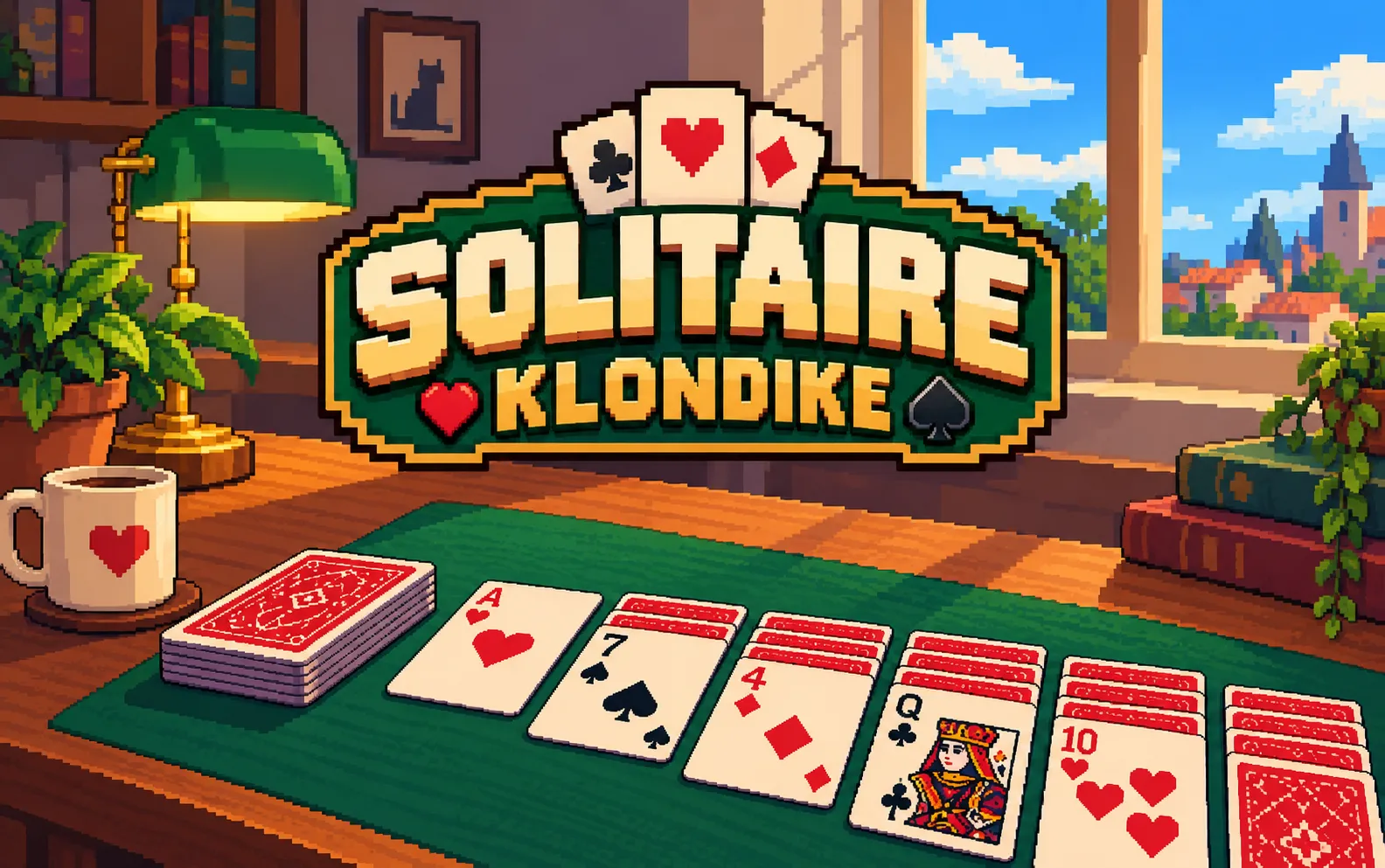
Klondike uses one standard 52-card deck. The tableau starts with seven columns from left to right. The first column gets one face-up card, the second gets one face-down card and one face-up card, and the pattern continues until the seventh column has six hidden cards and one visible card.
The remaining 24 cards become the stock. Cards drawn from the stock move into the waste. The four empty foundation spaces are where each suit must eventually be built from Ace through King.
- Tableau: seven columns where most of the sorting happens.
- Stock: the face-down draw pile.
- Waste: the face-up draw pile, where only the top card is playable.
- Foundations: four suit piles built upward from Ace to King.
Legal moves
Tableau columns build downward by alternating color. A red 9 can receive a black 8, and a black Queen can receive a red Jack. Any face-up sequence that already follows that pattern can move together as one stack.
Only Kings can move into an empty tableau column. Foundations build upward by suit, so the Ace of hearts starts the hearts foundation, then the 2 of hearts, 3 of hearts, and so on until the King.
When you move the last face-up card away from a tableau column and expose a face-down card, that card flips automatically. The win condition is simple: all 52 cards must reach the four foundations.
Draw 1 versus Draw 3
Draw 1 turns one stock card at a time, which makes it easier to reach specific cards and usually gives newer players more useful choices. Draw 3 turns cards in groups of three, and only the top waste card is playable, so the order of the stock matters much more.
The odds difference is not a single universal number because redeal limits, scoring, undo, and whether the player has perfect knowledge all change the result. The practical difference is consistent: Draw 1 improves card access, while Draw 3 forces you to plan around triplets and sometimes leave a visible move alone because it exposes a better waste card later.
A practical strategy checklist
Good Klondike play is less about moving every available card and more about choosing the move that creates the most new information. A move that flips a hidden tableau card is usually stronger than a move that only tidies cards you can already see.
Empty columns are powerful but narrow. Treat them as King lanes, not general storage. Before opening a column, ask which King or King-led sequence can use it and whether that move will uncover another hidden card.
- Reveal face-down tableau cards before improving visible piles.
- Do not rush every card to the foundations; low cards can still be needed as landing spots.
- Prefer moves that open a long buried column over moves that only make the board look cleaner.
- In Draw 3, watch the current waste triplet and think about what moving the top waste card will expose next.
History and naming
Klondike became the best-known solitaire layout in North America, which is why many players simply call it Solitaire. In the UK and in older card-game books, the broader family is often called Patience.
The name Canfield can be confusing. Some older American references used Canfield around Klondike-like play, while the patience game now commonly called Canfield is a different layout with a reserve pile. On Opka, Klondike means the seven-column game played by the familiar Solitaire rules.