



Guide
How to Play TriPeaks Solitaire
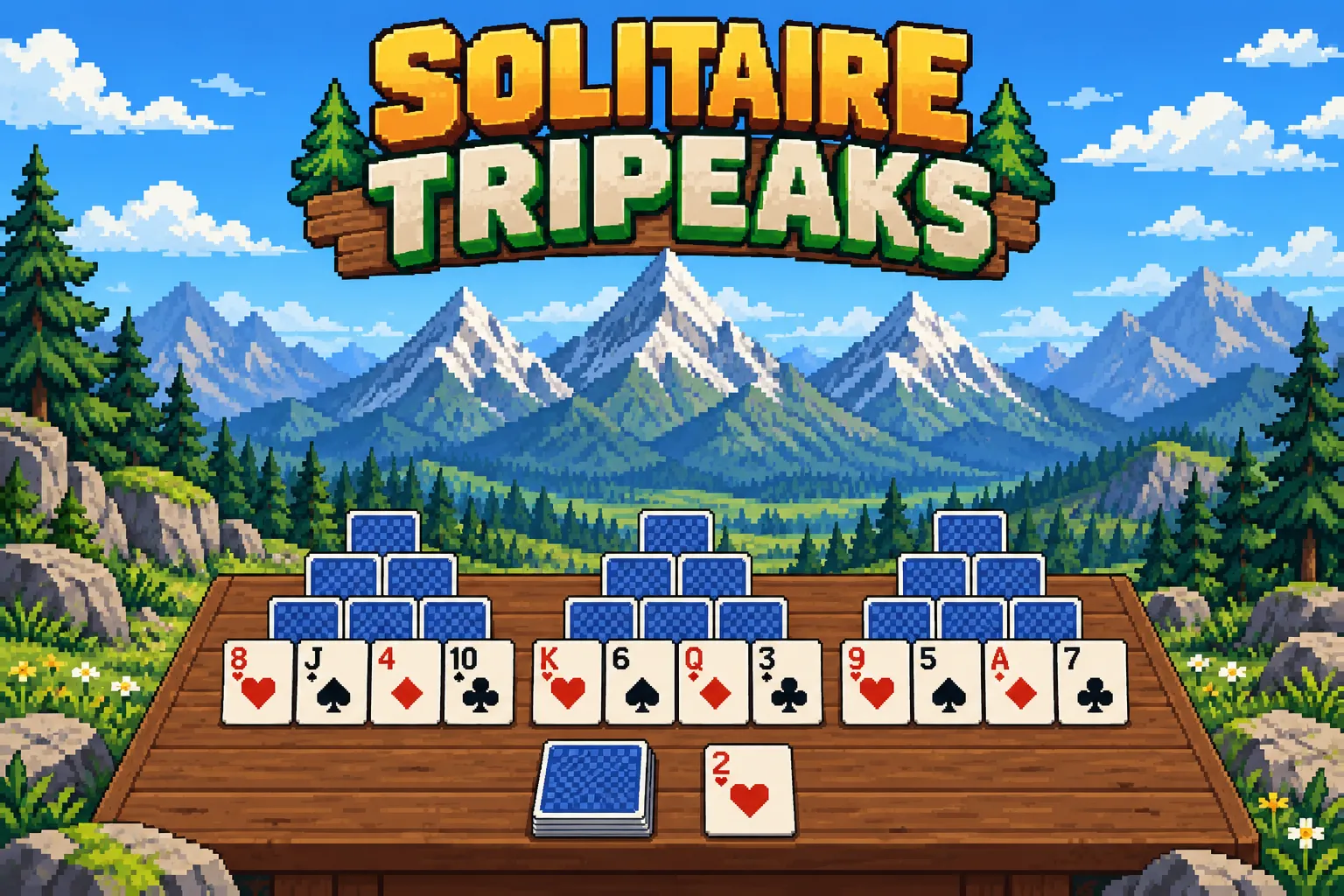
TriPeaks Solitaire is a fast waste-matching clearer. Instead of building tableau columns or pairing cards to 13, you remove exposed peak cards by playing them onto the waste when they are one rank higher or lower than the current waste card.
The skill expression is the streak. Drawing from the stock gives you a new waste card, but it breaks the chain. A good TriPeaks player scans the exposed cards before drawing, looking for a route that clears several cards in one run.
How TriPeaks Solitaire is set up
TriPeaks uses one standard 52-card deck. Twenty-eight cards form three overlapping peaks. The covered peak cards start face down, while the ten bottom-edge cards start face up because nothing covers them.
The remaining cards become the stock and waste. Opka turns the first stock card onto the waste to start the round, leaving 23 cards in the one-pass stock.
- Tableau: 28 cards arranged across three peaks.
- Waste: the active card that tableau cards must match by adjacent rank.
- Stock: 23 remaining cards, drawn one at a time with no recycle.
- Goal: clear all 28 tableau cards.
Legal moves
A tableau card is playable only when no card overlaps it. If the card is uncovered, it may move onto the waste when its rank is one above or one below the waste top. Suits do not matter.
Opka uses the common digital TriPeaks wrap rule by default: Ace can play on King or 2, and King can play on Queen or Ace. Drawing a stock card is always allowed while stock remains, but it resets the current streak.
TriPeaks versus Pyramid
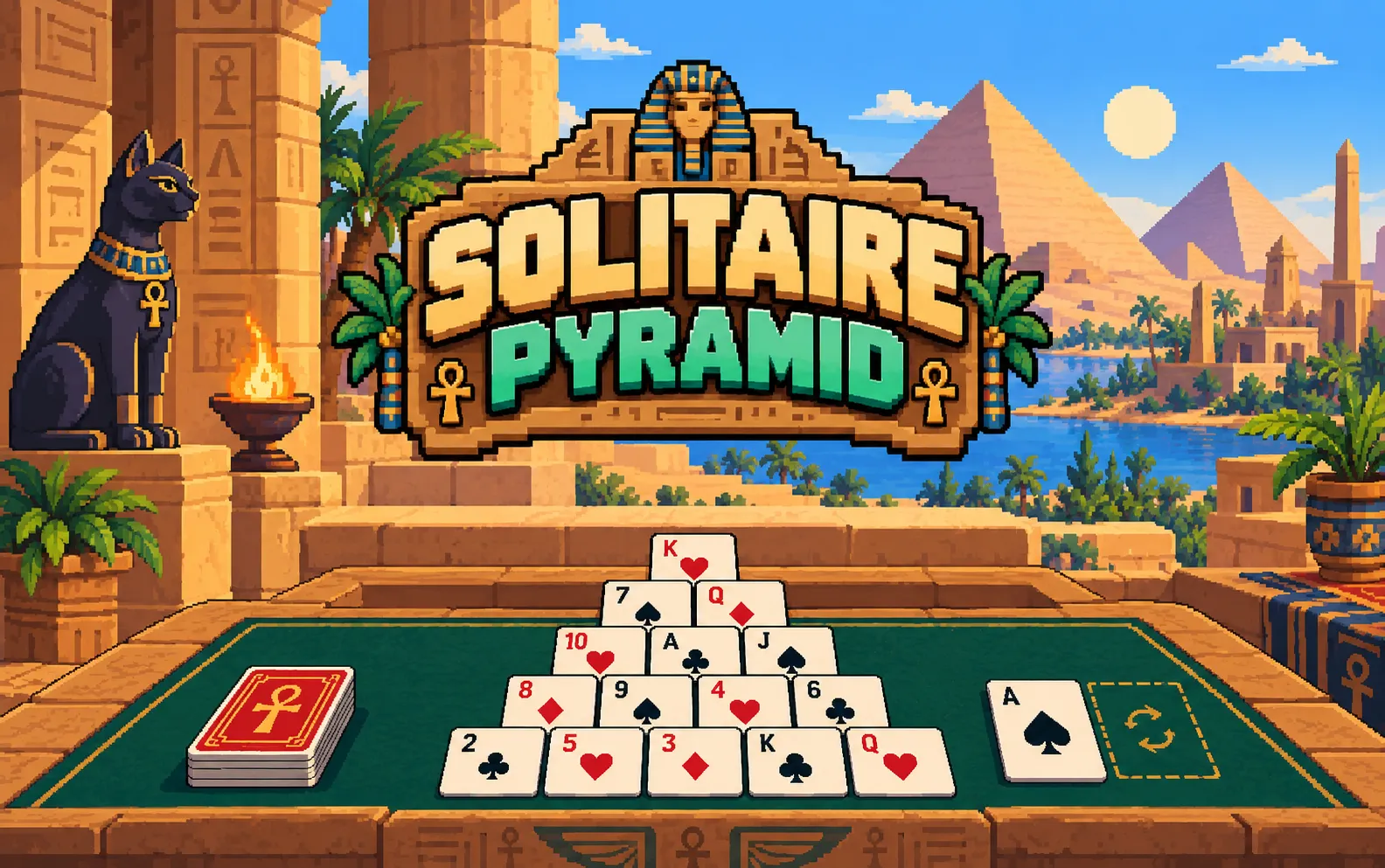
Pyramid and TriPeaks both use overlapping card layouts, but the matching rule is different. Pyramid removes pairs that total 13. TriPeaks plays one exposed card at a time onto the waste by adjacent rank.
That makes TriPeaks more about route planning. A 6 on the waste might let you play 7, then 8, then 9, then 10 if the board exposes them in the right order.